The Significance of Thorough Welding Inspection in Industrial Applications
In the world of commercial applications, the relevance of precise welding evaluation can not be overstated. It plays a crucial function in guaranteeing the structural honesty and durability of welded parts. Advanced non-destructive screening methods enable the very early discovery of prospective defects, such as splits and incomplete fusion, which, if left uncontrolled, might lead to tragic failings. Additionally, adherence to stringent market criteria not just ensures quality yet also constructs client self-confidence. As we discover the diverse advantages of diligent welding assessments, one must think about the more comprehensive implications on security, integrity, and cost-effectiveness in industrial procedures.
Enhancing Structural Integrity
When it comes to welding inspection in industrial applications, improving structural honesty is extremely important. The key objective of welding assessment is to make certain that the welds are qualified of bearing the anticipated stress and anxieties and tons they will encounter in solution.
The significance of maintaining architectural stability in welded frameworks can not be overemphasized. Badly performed welds can lead to catastrophic failings, leading to costly repair work, downtime, and even endangerment of human lives. For that reason, assessors play a crucial duty in the lifecycle of commercial components, giving assurance that the welding procedure provides the desired toughness and longevity.
Additionally, advanced modern technologies, such as phased range ultrasonic screening and digital radiography, deal improved capabilities in finding prospective weaknesses, permitting restorative measures before problems intensify. By focusing on the stability of welds via precise inspection, markets can ensure functional efficiency and expand the longevity of their facilities.
Recognizing Welding Defects
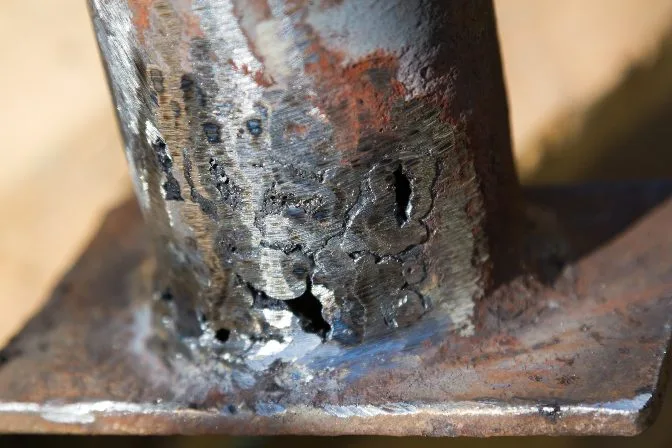
Recognizing welding issues is a critical element of making certain the safety and security and dependability of welded structures. Common welding defects include porosity, splits, insufficient combination, and damaging.
Skilled examiners make use of both visual exam and advanced non-destructive screening (NDT) methods, such as ultrasonic or radiographic screening, to discover these issues. The timely recognition and correction of welding flaws are vital to keep the structural stability and longevity of industrial elements.
Making Certain Compliance Specifications
Compliance with recognized standards, such as those provided by the American Welding Society (AWS) and the International Organization for Standardization (ISO), guarantees that welds meet minimal safety and security and top quality demands. These requirements encompass a wide array of standards, consisting of material specs, welding procedures, and credentials of welders.
Routine audits and assessments are necessary in confirming conformity. Examiners should possess a thorough understanding of the pertinent requirements and be adept at making use of different non-destructive testing (NDT) techniques to examine weld high quality. By guaranteeing that welding practices straighten with compliance criteria, business reduce the threat of non-conformity, which can cause additional info legal responsibilities and safety dangers.
Moreover, preserving conformity not only safeguards architectural integrity however additionally enhances a business's reputation in the sector. Clients and stakeholders are most likely to depend on companies that consistently demonstrate a dedication to top quality and safety with rigorous compliance. Thus, guaranteeing conformity criteria is a vital part in the successful application of welding in commercial applications.
Reducing Maintenance Expenses
The application of sophisticated non-destructive screening (NDT) techniques, including ultrasonic, radiographic, and magnetic fragment evaluations, enhances the capability to discover subsurface flaws without endangering the structural honesty of elements. By employing these methods, industries can dramatically expand the life span of their equipment, lowering downtime and the connected economic concern of upkeep activities.
In addition, a robust welding examination program sustains the optimization of maintenance routines, shifting from responsive to predictive maintenance strategies. This positive strategy not only curtails unforeseen failures however additionally improves source allocation, making sure that maintenance initiatives are concentrated and effective. Inevitably, the investment in extensive welding examination is offset by the considerable financial savings realized with lowered maintenance demands, adding positively to the general functional efficiency of industrial ventures.
Improving Safety And Security Measures
Although security is an extremely important concern in industrial operations, attaining ideal safety and security criteria calls for a dedicated focus on the high quality and dependability of welded frameworks. Welding assessment plays a crucial role in this context, as it guarantees that all joints and connections satisfy rigid safety and security standards. Comprehensive inspections help identify defects such as cracks, porosity, or incomplete fusion that could compromise structural integrity. Such defects, if left unaddressed, pose substantial dangers, potentially leading to catastrophic failures.
To improve precaution, taking on sophisticated non-destructive screening (NDT) methods is important. Methods like ultrasonic screening, radiographic testing, and magnetic particle inspection permit in-depth assessment without damaging the framework. These modern technologies make image source it possible for examiners to discover covert defects early in the construction procedure, helping with timely rehabilitative activities. Additionally, executing a durable high quality control system that includes regular training for assessors and welders makes sure adherence to established safety criteria.
Last but not least, cultivating a society of safety within the organization highlights the relevance of comprehensive welding assessments. Encouraging open interaction and cooperation among assessors, welders, and designers adds to a common dedication to safety excellence. Welding Inspection Madison. In doing so, industries can protect their procedures, secure workers, and keep public trust fund

Verdict
Complete welding evaluation is essential in industrial applications, dramatically enhancing architectural stability and reliability. Inevitably, the thorough implementation of welding assessments plays an essential function in maintaining operational efficiency and security in industrial setups.
As we explore the multifaceted advantages of diligent welding assessments, one need to consider the wider implications on safety and security, dependability, and cost-effectiveness in industrial procedures.
The primary objective of welding assessment is to ensure that the welds are qualified of birthing the expected stress and anxieties and tons they will certainly run into in solution. Effective welding evaluation plays an indispensable duty in minimizing these costs by making sure the honesty and long life of welds, therefore mitigating the risk of premature failures.Complete welding assessment is essential in commercial applications, substantially you could look here boosting architectural integrity and integrity. Inevitably, the persistent execution of welding assessments plays a critical duty in keeping functional performance and safety and security in commercial setups.
Comments on “Why Pick Expert Welding Inspection Madison for Your Tasks”